
Strengthening climate-resilient water infrastructure, ensuring water security and addressing the growing climate vulnerabilities of Least Developed Countries (LDCs) were among the key issues highlighted during an international panel discussion at the 31st UN Climate Change Conference (COP31) in Antalya, Turkey.
Dr. Arjun Kumar Karki, Founding Member of LDC Watch and Member of Parliament of Nepal, participated as a panelist in the discussion titled “Building Climate Resilience Through Water Infrastructure: Lessons from Mountains, Rivers and Coasts,” organised by the OPEC Fund for International Development on 12 November 2026 at the OPEC Fund Pavilion in the Blue Zone. The panel brought together experts and representatives from Oman, Tajikistan and Morocco to share experiences on strengthening climate resilience through water infrastructure.
Sharing Nepal’s experience and the wider concerns of climate-vulnerable developing countries, Dr. Karki highlighted the growing impacts of climate change on mountain water systems and the serious implications for downstream communities. He emphasised that the Hindu Kush Himalaya, often described as the “Water Tower of Asia”, is fundamental to water security, livelihoods, food production and energy generation for millions of people across the region.

He noted that accelerating glacier retreat, changing snowfall and melting patterns, erratic rainfall, floods, landslides and glacial lake outburst floods are increasingly disrupting mountain water systems. These changes threaten settlements, agricultural land, hydropower facilities, roads and bridges, as well as drinking water supplies and food security. Nepal’s recent experience with glacier-related disasters and flooding demonstrates how climate hazards originating in mountain areas can rapidly become major humanitarian and development challenges.
Connecting these challenges to the wider situation of LDCs, Dr. Karki stressed that countries with limited financial and institutional capacities face disproportionate difficulties in protecting their populations and infrastructure from climate risks. He called for a shift from reactive disaster response towards prevention, preparedness and long-term resilience, ensuring that climate and disaster risk assessments are integrated into the planning, design and operation of critical infrastructure.
On science, monitoring and regional cooperation, he highlighted the need for stronger scientific research, glacier and river monitoring, satellite-based observation, climate modelling and effective early warning systems. He also stressed that timely information must reach vulnerable communities and local governments so they can prepare for and respond to climate-related disasters. As rivers cross national boundaries, he called for stronger regional cooperation through data sharing, joint scientific assessments, coordinated forecasting and integrated river basin management.
Dr. Karki emphasised that accessible, affordable and non-debt-creating climate finance is essential for LDCs to build climate-resilient water infrastructure. He highlighted the need for adequate financial resources, technical assistance, technology and institutional capacity-building, alongside support from development finance institutions and international partners. Such support must strengthen national capacities without adding unsustainable debt burdens to countries already facing significant climate and development challenges.
He also highlighted the role of parliaments in strengthening climate governance, ensuring that scientific evidence informs national policies, legislation and public budgets. Parliamentary oversight and accountability are essential to ensuring that infrastructure investments address climate risks, uphold environmental safeguards and protect vulnerable communities.
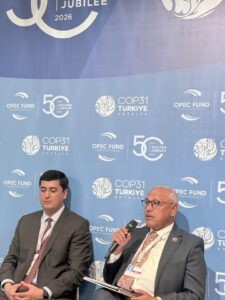
Concluding his intervention, Dr. Karki emphasised that “no country can secure its water future in isolation.” He underscored the importance of science-based planning, effective monitoring, regional cooperation, accountable institutions and accessible climate finance in building long-term water resilience.
The discussion brought important perspectives from Nepal and the wider LDC community into the global conversation on climate-resilient infrastructure. It reinforced the need to recognise the particular vulnerabilities and development constraints of LDCs in climate policy, infrastructure investment and financing decisions.
For LDCs, strengthening water resilience is not simply an infrastructure priority; it is closely linked to climate justice, sustainable development, food and energy security, and the protection of vulnerable communities. LDC Watch continues to advocate for equitable access to climate finance, appropriate technologies and international cooperation that responds to the needs and realities of the world’s most climate-vulnerable countries.
